








What is Dementia?
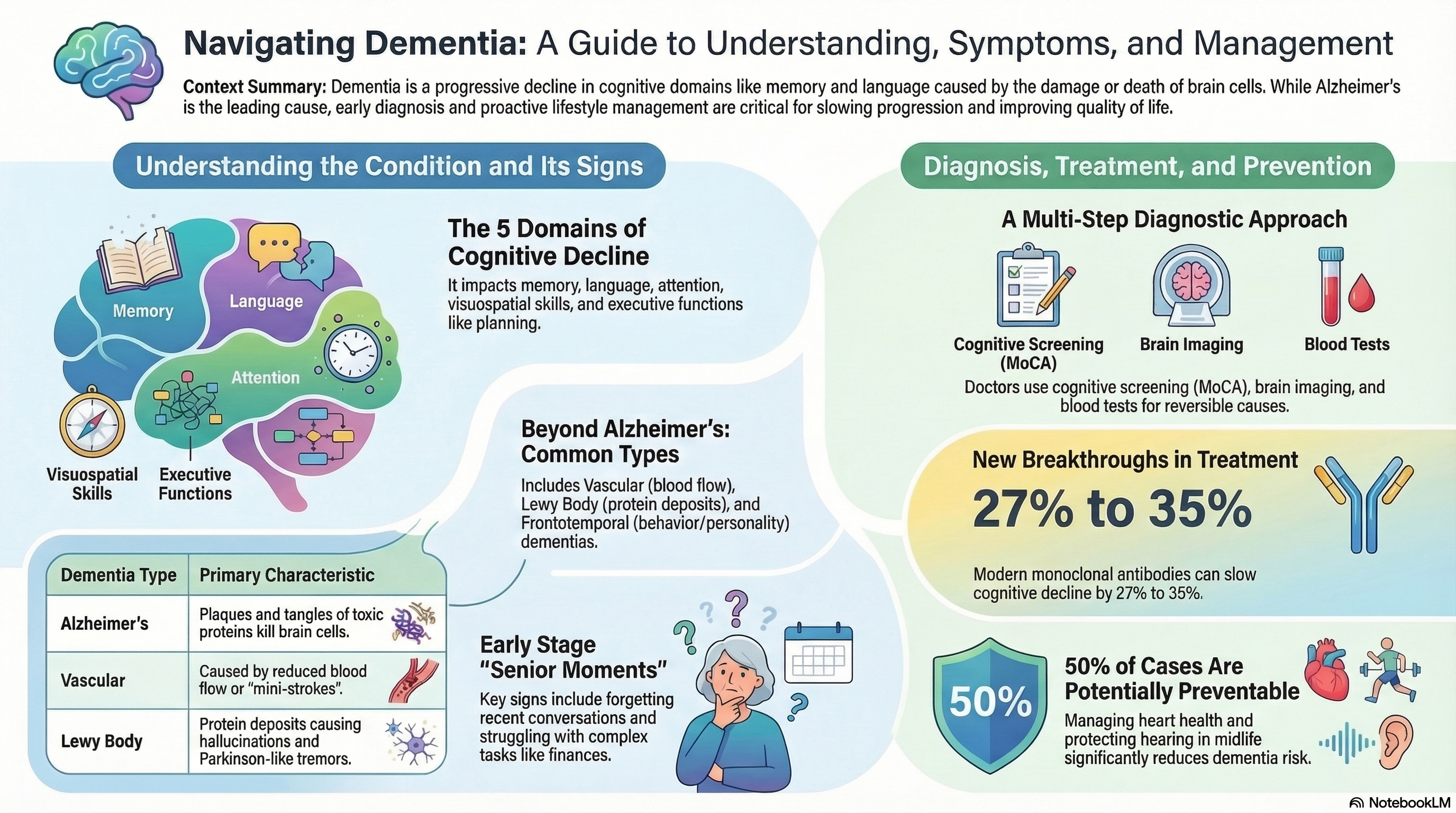
Dementia involves the decline of one or more cognitive "domains," such as memory, language, attention, visuospatial skills, and executive function (planning and organizing). It is a progressive condition, typically moving through early, middle, and late stages.
While Alzheimer’s is the most frequent cause, other common types include:
-
Vascular Dementia: Caused by reduced blood flow to the brain, often following a series of "mini-strokes."
-
Lewy Body Dementia: Characterized by abnormal protein deposits that can cause visual hallucinations and Parkinson-like tremors.
-
Frontotemporal Dementia: Often diagnosed at a younger age (45–65), primarily affecting personality, behavior, and language.
-
Mixed Dementia: A combination of two or more types, most commonly Alzheimer’s and vascular pathology.
Causes of Dementia
Dementia is caused by the damage or death of nerve cells in the brain. When these cells (neurons) lose their ability to communicate, the brain functions they control begin to fail.
-
Brain Cell Death: In Alzheimer’s, the hallmarks are "plaques" and "tangles" made of toxic proteins that kill brain cells.
-
Vascular Issues: Strokes or small vessel disease can starve brain cells of oxygen.
-
Genetic Factors: Most dementia is not directly inherited, but certain genes, like APOE4, can increase risk. Rare familial genes (APP, PSEN1, PSEN2) can cause early-onset dementia in people younger than 60.
-
Modifiable Triggers: Many cases are influenced by lifestyle factors that damage brain health over time, such as untreated high blood pressure, diabetes, midlife obesity, and smoking.
Symptoms of Dementia
Symptoms evolve over time, but the earliest signs are often dismissed as "senior moments."
Early Stages:
-
Forgetting recent conversations or events.
-
Difficulty finding the right words.
-
Trouble with complex tasks like managing finances or planning a meal.
-
Misplacing items in unusual places.
Middle and Late Stages:
-
Significant memory gaps, such as not recognizing family members.
-
Confusion regarding time and place.
-
Personality changes, including agitation, anxiety, or wandering.
-
Sundowning: A pattern of increased confusion or agitation in the late afternoon and evening.
-
Physical decline, including difficulty swallowing, loss of bladder/bowel control, and eventually becoming bedbound.
Diagnosis of Dementia
Early diagnosis is more critical than ever because new treatments are most effective in the earliest stages. There is no single "dementia test"; instead, doctors use a multi-step process.
-
Comprehensive History: A doctor will interview both the patient and a close family member to assess how memory changes have impacted daily life.
-
Cognitive Screening: Standardized tests like the Montreal Cognitive Assessment (MoCA) or the Mini-Cog measure memory, orientation, and language.
-
Ruling Out Reversible Causes: Blood tests are used to check for "pseudo-dementia" causes, such as Vitamin B12 deficiency, thyroid disease, or infections.
-
Brain Imaging: CT or MRI scans help identify strokes, tumors, or the specific patterns of brain shrinkage (atrophy) associated with different types of dementia.
Treatment of Dementia
While there is currently no cure for most types of dementia, treatments focus on slowing the decline and managing symptoms.
Disease-Modifying Drugs (For Early Alzheimer’s): As of 2024–2025, new monoclonal antibody treatments like Lecanemab (Leqembi) and Donanemab (Kisunla) have been approved. These intravenous treatments target and clear amyloid plaques from the brain, potentially slowing cognitive decline by 27% to 35%.
Symptomatic Medications:
-
Cholinesterase Inhibitors (e.g., Donepezil): Used for mild to severe cases to help nerve cells communicate.
-
Memantine: Often added for moderate to severe disease.
-
Brexpiprazole: Specifically approved to treat the agitation associated with Alzheimer’s.
Nonpharmacologic Support: Physical exercise, socialization, and cognitively engaging activities are essential. For caregivers, support is vital, as up to 40% of those caring for loved ones with dementia report symptoms of depression.
Prevention of Dementia
Evidence suggests that up to 40% to 50% of dementia cases may be delayed or prevented through lifestyle modifications.
-
Manage Heart Health: Treating hypertension (high blood pressure) and diabetes in midlife significantly protects the brain.
-
Protect Your Hearing: Hearing loss is a major modifiable risk factor; using hearing aids can reduce the "cognitive load" on the brain.
-
Stay Social and Active: Regular physical exercise and maintaining strong social connections help build "cognitive reserve."
-
Quit Smoking and Limit Alcohol: Reducing toxins helps prevent vascular damage to the brain.
-
Lifelong Learning: Higher levels of education and continuous mental stimulation provide a protective effect against early symptoms.