





What is Celiac Disease?
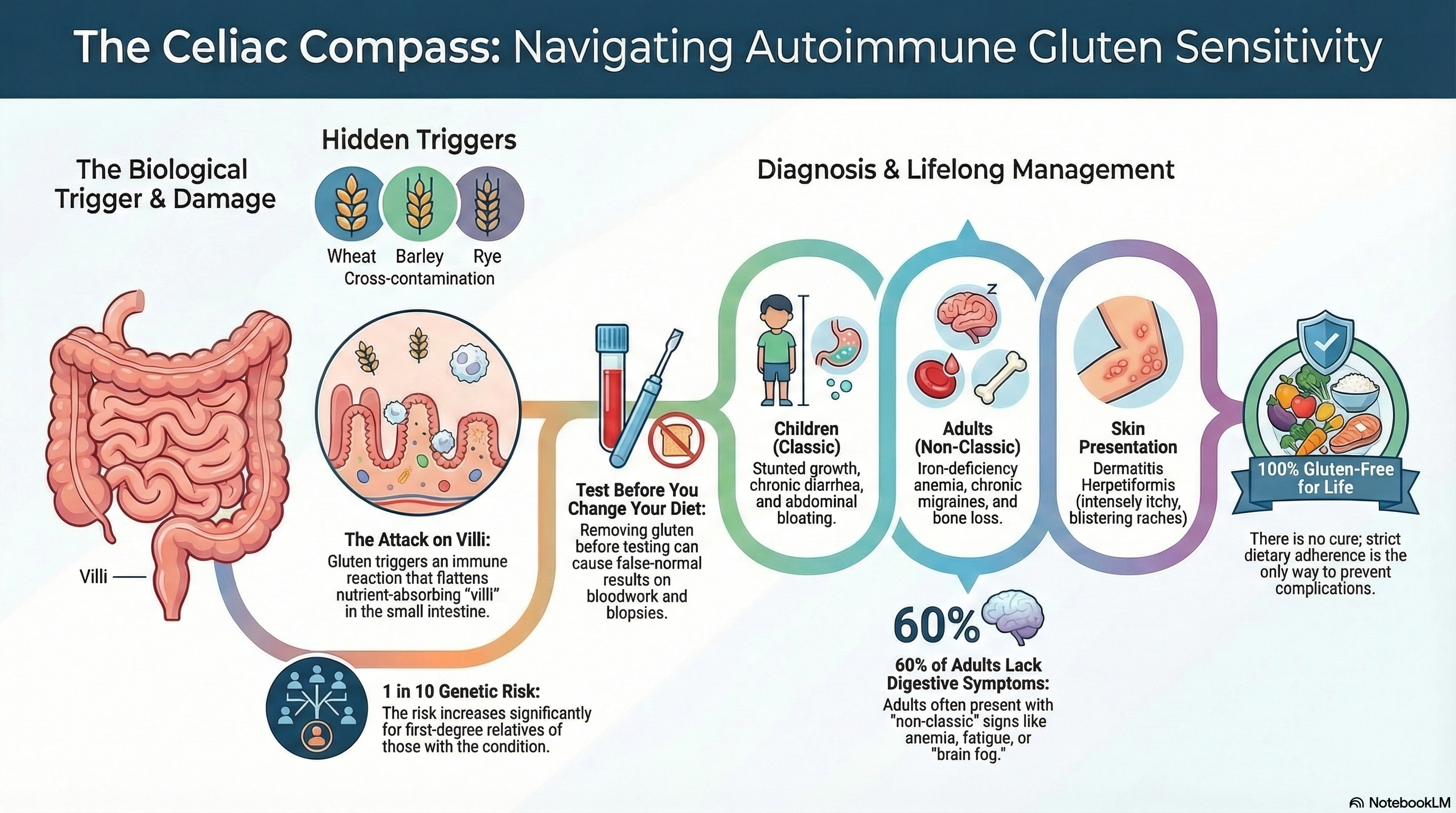
When an individual with celiac disease eats gluten, their immune system identifies the protein as a threat. This triggers an inflammatory reaction that damages the villi—tiny, finger-like projections lining the small intestine.
Healthy villi are essential for absorbing vitamins, minerals, and other nutrients from food. When they become flattened or destroyed (a process called "villous atrophy"), the body can no longer absorb nutrition properly, regardless of how much a person eats. This leads to malabsorption and a wide range of systemic health problems.
Causes of Celiac Disease
Celiac disease is caused by a complex interaction between genetics and the environment.
-
Genetics: The disease is strongly hereditary. If you have a first-degree relative (parent, child, or sibling) with the condition, your risk of developing it increases to 1 in 10.
-
Gluten Exposure: The condition is specifically triggered by gluten found in:
-
Wheat: Including spelt, farro, and kamut.
-
Barley: Found in malt, food coloring, and beer.
-
Rye: Commonly found in rye bread and pumpernickel.
-
-
Environmental Triggers: Sometimes the disease becomes active for the first time after surgery, pregnancy, childbirth, viral infection, or severe emotional stress.
Symptoms of Celiac Disease
Symptoms can be highly variable and may differ significantly between children and adults.
Classic Symptoms (More common in children):
-
Chronic diarrhea or constipation.
-
Abdominal pain and bloating.
-
Foul-smelling, fatty stools (steatorrhea).
-
Failure to thrive, stunted growth, or delayed puberty.
Non-Classic Symptoms (Common in adults): Up to 60% of adults do not have digestive symptoms. Instead, they may experience:
-
Unexplained iron-deficiency anemia.
-
Chronic fatigue and migraines.
-
Early-onset osteoporosis or bone loss.
-
Dermatitis Herpetiformis: An intensely itchy, blistering skin rash usually found on elbows, knees, or buttocks.
-
Joint pain and "brain fog."
-
Mouth ulcers (canker sores) and dental enamel defects.
-
Recurrent miscarriage or infertility.
Diagnosis of Celiac Disease
It is vital that you do not start a gluten-free diet before testing, as removing gluten from your diet can cause test results to appear normal even if you have the disease.
-
Blood Screening: Doctors look for specific antibodies, primarily tTG-IgA (tissue transglutaminase). If these levels are elevated, it suggests an autoimmune reaction to gluten.
-
Endoscopy and Biopsy: To confirm the diagnosis, a gastroenterologist performs an upper endoscopy to take tiny tissue samples (biopsies) from the small intestine. This allows them to see if the villi are damaged.
-
Genetic Testing: Testing for the HLA-DQ2/DQ8 genes can help rule out the disease; if you do not have these genes, it is almost impossible to have celiac disease.
Treatment of Celiac Disease
Currently, the only treatment for celiac disease is a strict, 100% gluten-free diet for life. There are no medications or surgeries that can cure the condition or allow you to eat gluten safely.
-
Dietary Adherence: Even a tiny crumb or cross-contamination (such as using a shared toaster) can trigger immune damage, even if you don't feel "sick" afterward.
-
Healing Timeline: In most cases, the small intestine begins to heal within weeks, and full recovery of the villi typically occurs within 6 to 24 months.
-
Nutritional Support: Since the disease causes malabsorption, your doctor may recommend supplements for iron, calcium, vitamin D, and B12.
-
Emerging Research: Several therapies, such as gluten-degrading enzymes and vaccines, are in clinical trials (2024–2026) to help manage accidental exposure, but they are not yet approved for use.
Prevention of Celiac Disease
Because celiac disease is a genetic autoimmune condition, there is currently no known way to prevent it from developing. However, you can prevent the serious complications associated with the disease through early detection and strict management.
-
Proactive Screening: If you have an associated condition such as Type 1 Diabetes, autoimmune thyroid disease, Down Syndrome, or a first-degree relative with celiac, you should be screened even if you have no symptoms.
-
Avoid Complications: Untreated celiac disease can lead to long-term health risks, including:
-
Small bowel cancers (lymphoma).
-
Infertility.
-
Permanent neurological damage.
-
-
Cross-Contamination Awareness: Prevention also involves being vigilant about "hidden" gluten in medications, lip balms, sauces, and processed foods.